This and La La Land are big awards contenders this year. Is this one any good?
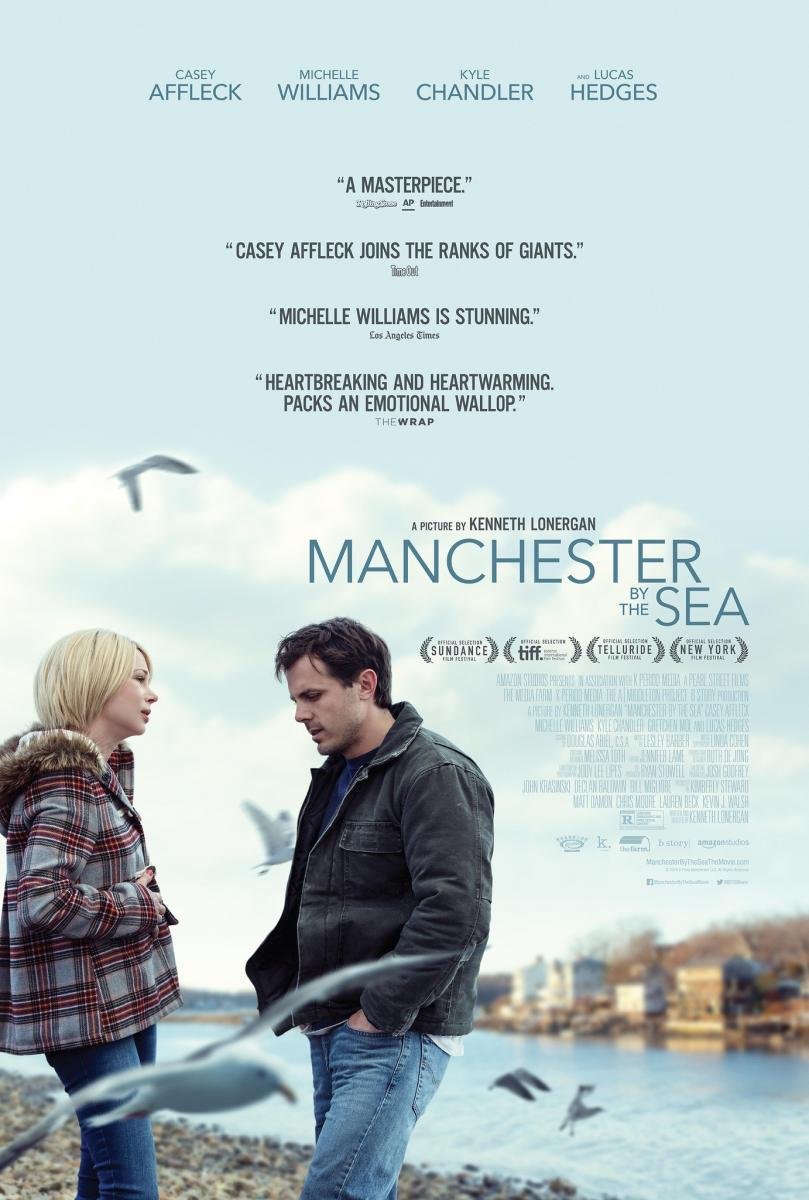
Manchester by the Sea tells the story of a janitor who has recently lost his older brother and is trying to connect to his nephew for whom he may have to become a legal guardian.
This opening conversation on this boat is actually one of my favourite moments in the film. Too bad it’s revisited a bit too often.
Casey Affleck is the janitor and he’s at the heights of his powers as an actor here. His character must go through so much pain that’s not his fault, but he can’t help blaming himself for.
Lucas Hedges is the nephew. In his first film role, we are witnessing the birth of a heavyweight performer, he’s simply awesome.
Their performances are complemented by a phenomenal script. Conversations are slow, faltered, real. The people these two characters interact with don’t quite know what to do or say to them while they suffer through this experience. This is a script that seems to understand grief.
Unfortunately, this also contributes to the worst offence of this film. 2 hours and 20 minutes is entirely too long for an indie drama on grief. There are sequences that seem to drag in a good way to show the awkwardness of their situation, them there are scenes which drag for no reasons, moments playing out practically in slow motion.
The resolution is also a little off. While I understand the need for no concrete answers to this grief (that part is done great), the logic behind some decisions at the end of the film doesn’t always fit.
The music is also a bit jarring. We appear to have a score of classical music which would be fine if not for the lack of consideration of tone for the tracks in relation to where they come.
Casey Affleck will most likely get an Oscar here, but if you’re really wanting a film that discusses grief that does a better job, go re-watch A Monster Calls.
Recommended Scenario: If you want a talky indie that needs a bit of an edit to be perfect.
Another late review. In a time took to get this started, I’m surprised the DVD isn’t out yet.
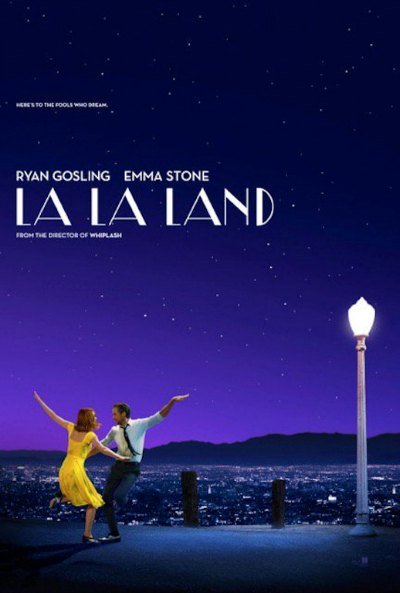
La La Land is the latest offering from Damien Chazelle, director of one of my faves of 2015, whiplash. This one is a musical love story between Emma Stone and Ryan Gosling as a struggling actress and hipster jazz musician respectively.
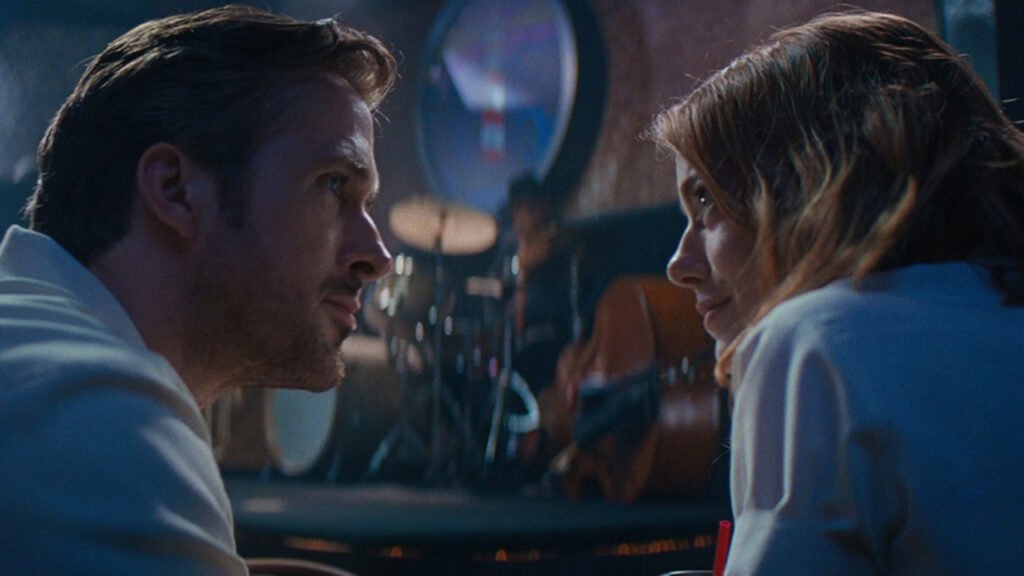
Ryan being as smooth as Jazz
First things first, there are pretty much zero faults in this film. La La Land’s direction, cinematography, editing, choreography, acting, writing and music are perfect to a bizarre degree.
“Bizarre” in that I still don’t get that special tingle. You know, that tingle from the back of your head when you watch a masterpiece. The tingle I see other people are feeling from this film.
I’ve spent days looking at my friend’s Facebook posts trying to work out what’s gone wrong in my head.
I think I found some answers.
For one, hype is a dangerous thing. The number of stars in the trailer for this film is astonishing (there’s another quote for the poster), so forgive me if I was expecting something life altering. The number of times I’ve recommended people watch the greatest movie of all time, The Lord of the Rings Trilogy, and the response is “That was pretty good”, made me appreciate that this might not be a unique phenomenon.
Secondly, 2016 made me a total cynic. This movie is Oscar bait with LA setting and Hollywood glory. Scrub it can be great, but the context does her sceptic critic.
I can’t even complain about that too much, nor can I a wine about the hipster nature of the characters since that ends up being part of their development. The films art presents as with the world and tells us that La La Land is as fake as it sounds. We can’t have everything, art does have to move on, while respecting the past. This level balance is something I truly admire in the same way I love the bounds of Birdman (shut up it was not a pretentious movie, a pretentious director maybe, but nothing else).
Finally, there is the phenomenon of “So good it’s bad”, first explained to me in a Nostalgia Critic video. This film is so perfect in all reviewable factors including its surprisingly complex message, the kind of shoot itself in the foot.
Shawshank redemption is a 99.9% perfect film (all the too cutesy final moment), yet The Green Mile speaks to me more, Jesus allegory and all. Maybe I’m just as much a hipster as Ryan Gosling’s character.
So, my conclusion is that La La Land shows me to be an irrational hipster with great pretension. Thanks, La La Land.
Recommended Scenario: Don’t listen to me, you’ll almost certainly love this.
A woman brought what looked like a six year old child to my screening of this film. This is not a kids’ movie.
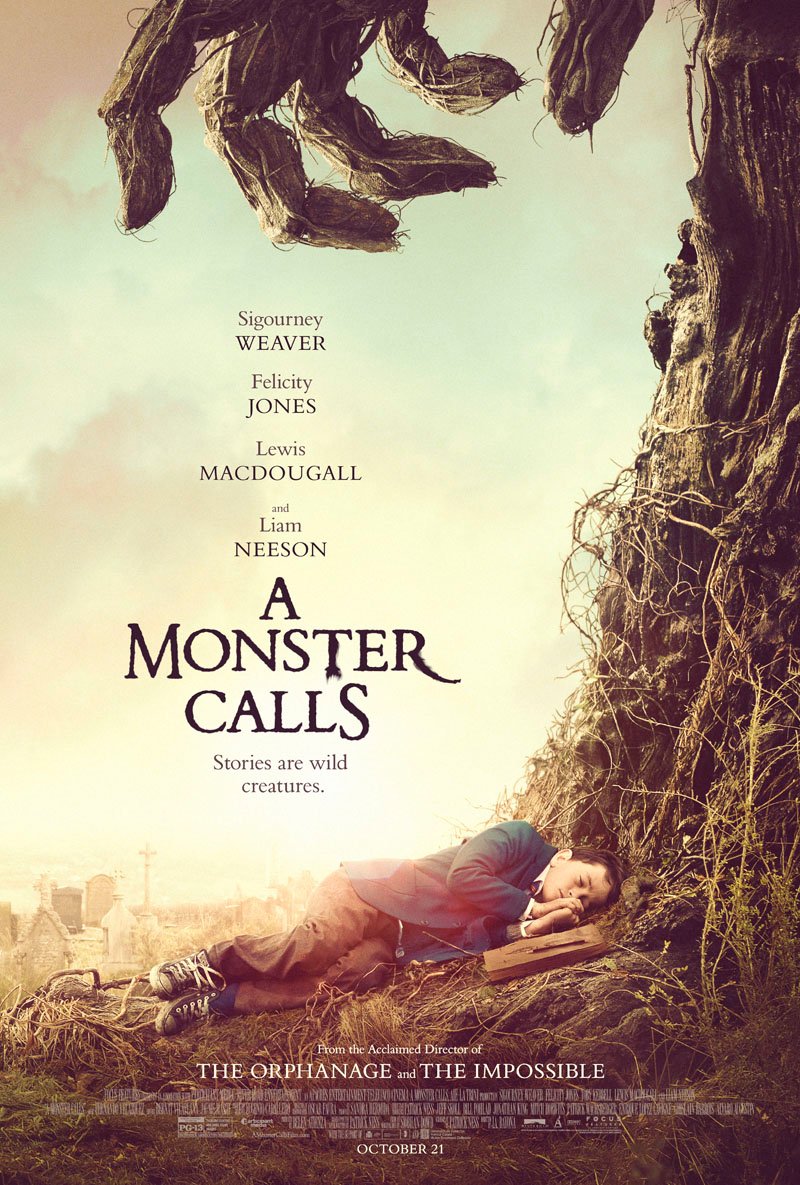
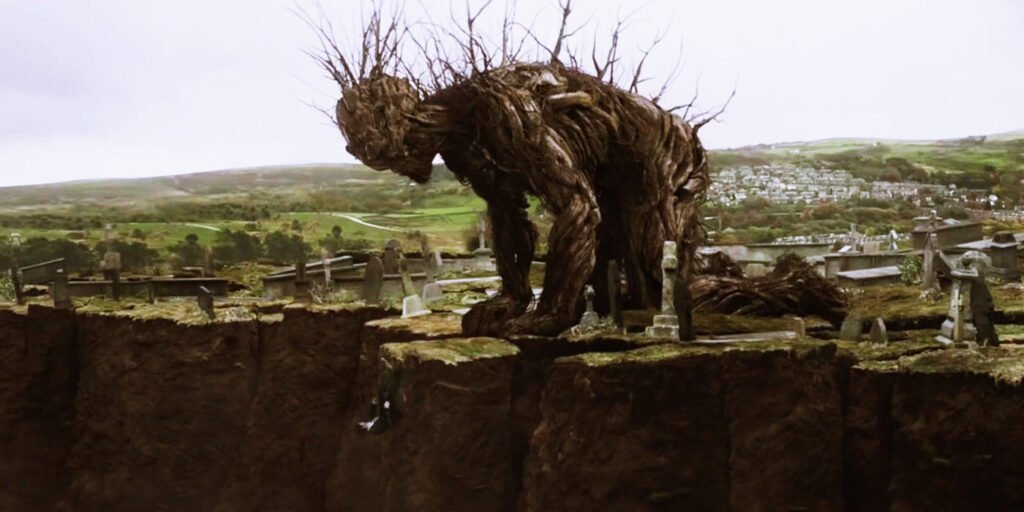
A Monster Calls is about a 12 year old boy called Conor. His mother is suffering from cancer. One night Colin is visited by a large, tree-monster who tells him that he’ll tell him 3 stories and that Conor will tell him a fourth one.
You know Tom Holland, the new Spider-man was involved with the mo-cap? That’s pretty cool.
Films about children using magical creatures to deal with trauma is nothing new. Pan’s Labyrinth, Where the Wild Things Are, Adventure Time, even Toy Story if you read between the lines does this.
There can be a lot of variation in the lessons a child protagonist can learn in such stories. These are tales about what it’s like when you’re a kid and you’re all alone, with nothing but your confusing thoughts. That’s a gold mine of artistic opportunity.
They dig that gold here with a wonderful piece of cinema.
J.A Bayona directed this. His previous well-known project was The Impossible which alsodealt with a very heartbreaking topic, that being the 2004 Thailand Tsunami. Here he does a brilliant job. This movie is so beautiful and it burns with such a focus on its characters that you just have to love it.
The acting is also amazing. Felicity Jones is the Mother, Sigourney Weaver plays her mum and Liam Neeson is the voice of the monster. All of them are excellent, but the stand-out is Lewis MacDougall as Conor. You look at this young man and he can convey everything he is thinking in a way only a great performer can.
This is not a movie for kids. There is nothing bad for them in it, no bad morals, but the moral is one that does require some maturity to fully understand. Like with Silence, this has a them which you don’t necessarily see very much. Not that a Kid can’t get complexity, its just that by the nature of this theme they have to go through some heart-wrenching stuff.
While doing so, you do get to experience some breathtaking visuals. Not only do you see great CGI in the form of the Monster who is this great Tree-Creature, but his stories come to life with amazing animation.
I am not going to say that this is an enjoyable film to watch but the emotional machine-gun fire I got from it makes it so worth the price of a ticket.
Recommended Scenario: If you want your heart ripped apart and put back together by a beautiful movie.
Just like last year, my most anticipated movie of the year (which last year was The Revenant) is a period art-piece about foreigners in a strange land which also happened to be the first review of the year. Is this one up to snuff?
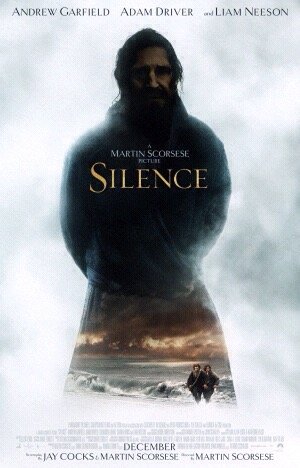
Silence is the latest from cinephile darling Martin Scorsese. Having been in the works for over 20 years, this one is based on the Shusaku Endo novel of the same name and tells the partially historically accurate tale of two 17th Century Portuguese Jesuit Priests (played by Andrew Garfield and Adam Driver) who go to Japan to find their mentor (Liam Neeson) who has reportedly denounced God in public.
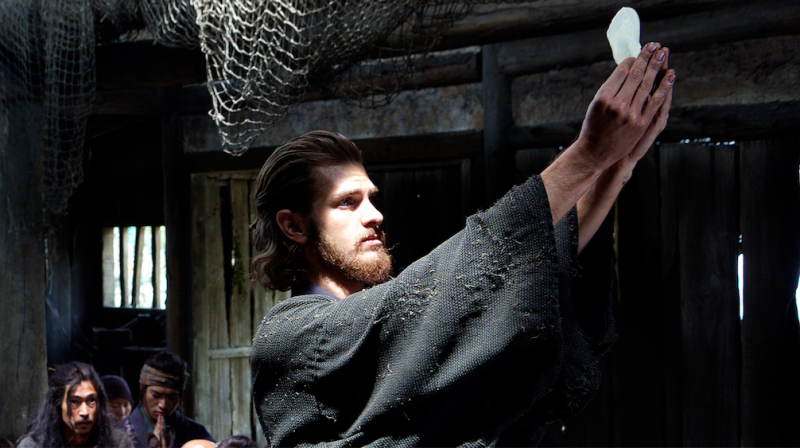
Giving bread to the followers of Christ at this time and place was one of the few acts of kindness they could give
This film took so long, not because of development hell like so many movies that do, but because Scorsese and his co-writer Jay Cocks were, in Kubrick-like fashion, never satisfied with how to depict the central conflict of the film, one I rarely if ever, see in a film; What does it mean to follow your religion?
Garfield, in a brilliant performance, plays the priest Rodrigues who acts as our eyes as he explores the vastly strange and dangerous medieval Japan. Dangerous for him as Christianity at that time was interpreted as a weapon of the usurpers from Europe and the Japanese squashed it with a sweeping and terrifying oppression.
I have not seen a film so spiritually complex to have come out in this century. Certainly, there have been great morally or cinematically complex films in recent years, but Silence has true guts, delivering us such a straight-up deconstruction of martyrdom, oppression, faith and love.
One thing important to remember about religion is that there are differences between religions and each religion as differences with itself, this film being brave enough to show both the ways in which a belief can be accepted across the world, yet still have these differences.
Religion can be seen as man’s vain attempt to find the beauty of the universe in man and sometimes the humanity of the universe in turn.
Rodrigues is torn throughout the film between the calling in his heart to Christ, his pride and the suffering in Japan around him watched by his silent Deity. This film knows that in order to talk about big things, we still have to see little people going through it. Some scenes in this film made me sympathise more with people of hidden faith than any other artwork has ever done.
I said “silent” very deliberately there. Not only is it almost the title of the film, but it is true of the film’s execution. No non-diagetic music is heard in the entire runtime (not even Gimme Shelter, a staple of Marty’s features), only the rustling of trees.
Scorsese’s style is quiet here too. Less showy post-modernism than in most of his films, no neo-realistic improvised dialogue scenes. We observe reverently as he gives us “soft” direction. He wants us to stop and listen to something important.
Before continuing, I must tell you my two ever-so-slight gripes with the movie. I’m not even sure whether I actually have these gripes, this is one of those movies where I don’t want to judge things too quickly, but some may find the runtime a little long at 3 hours and I’m not one-hundred percent sold on the ending’s lack of ambiguity. It’s not like there’s none in it, but I feel like it would be better to have a couple more questions and a couple less answers.
I am a huge Scorsese fan. Despite that I have not seen The Last Temptation of Christ or Kundun, his other two films whose surface subject matter is religion. However, I have seen enough of his work to know that he is a nearly untouchable master of his craft and a man who uses his movies to ask questions, like a great artist should.
You may know that Scorsese is a failed priest himself. Having dropped out of the seminary, he joined film school and has success ranging from good to great in movies ever since. The Auteur Theory has its holes in it (why should only one man get credit for all the work of thousands of people), but there’s not denying the man has a voice. A voice that adapts to every movie he makes, like Kierkegaard to his books.
How right then that he takes the voice of Ingmar Bergmann, that genius theologian and filmmaker to scream in a whisper his questions of God.
This review is pretty pretentious, I’ll admit, but it’s good to remember what “pretentious” actually means. It means striving toward some great meaning in a work of art and falling short, like Batman v Superman.
This film cashes the cheque. It goes just far enough, keeping enough human drama, suspense and respect to be that poem of humanity that it needed to be.
Is this Scorsese’s masterwork? I don’t think so. It doesn’t matter anyway. If you can’t tell already, it’s really, really good.
Recommended Scenario: If you want a companion piece to The Seventh Seal and The Mission that can genuinely hold a candle to both.