
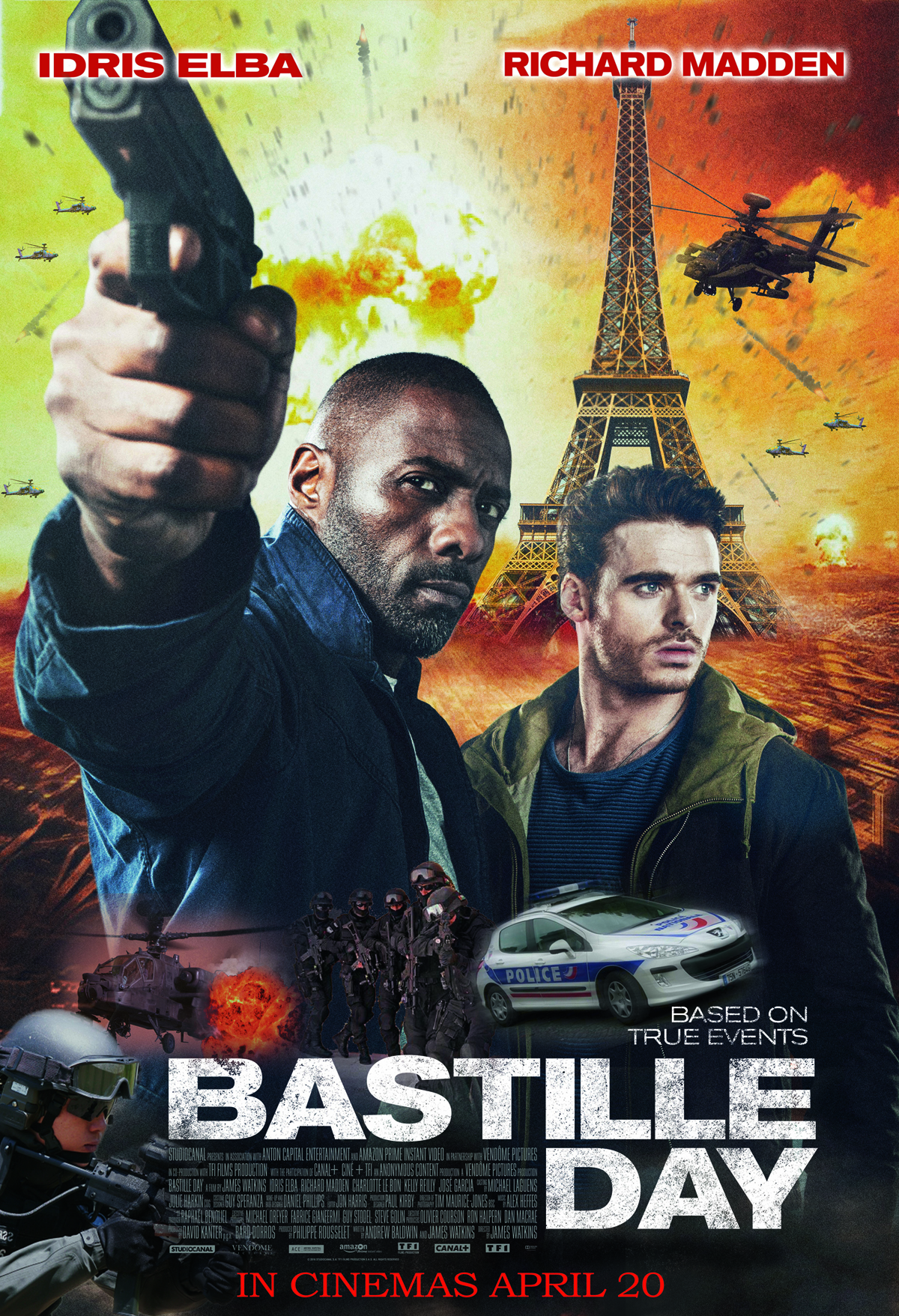
Bastille Day

This movie is supposedly based on real events. I’m guessing that statement is as awash with veracity as if it applied to Shrek.

Bastille Day, named after the French national holiday in commemoration of the storming of the Bastille (a big Parisian prison) in 1789 essentially starting the French Revolution, is an American action-thriller starring Idris Elba as a CIA agent trying to thwart a terror threat in Paris with the aid of a pick-pocket who has managed to get stuck in the middle of it.
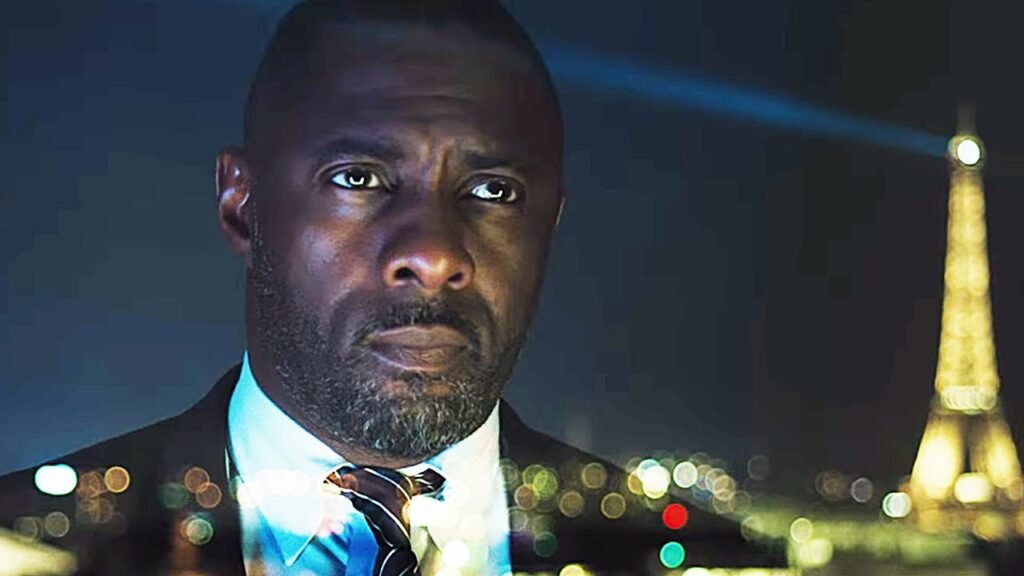
This is how Idris Elba’s character is introduced into the film. The classic focus pull from the exterior, to the character’s reflection as he walks toward the glass.

This may be over the top, but because it’s Idris, it kind of works.

I have to immediately praise this film for some aspects of the way it’s directed. Like other action films of recent years, there is of course plenty of shaky-cam (when the camera is shaken to add intensity to a scene) but it is never overused, which is more than I can say for most other films of this type.

I also couldn’t go without giving some props to Richard Madden, the guy who plays the pick-pocket I mentioned at the beginning of this film, whose character could so easily have been incredibly unlikable throughout this film, due to flaws in the way he is written, but he does a pretty good job with the material.

Unfortunately, however, there isn’t much else to praise to that level in the film. It’s a pretty standard thriller romp, with some pretty good action sequences and some actually rather nice comedy.

The only thing I had I hopes for in this film was Idris Elba, who I know to be a great actor and the pinnacle of cool. Sadly, while he does a good “grizzled agent” performance, the decision to have this film centred around the CIA rather than MI6 works to the detriment of this whole film as we have to hear his attempt at an American accent.

A brief aside, often I can’t figure out whether an actor is doing a bad accent because I’m used to their original voice coming out of them or whether they are just bad at the accent. Either way, I couldn’t take this film’s protagonist, Briar or Bryar (I’m not looking it up), seriously.

Taking itself seriously is not really this film’s priority I feel, however. This is a 90 minute film in which some seriously silly plot-conveniences could have been avoided to cut 20 minutes off of it. Heck, a man is able to escape an interrogation room, simply because the door was unlocked!

To call this film silly might put you in mind of Olympus Has Fallen or this film’s real name-sake Independence Day, but this film’s tone is more along the line of Die Hard, but with considerably less skill in its execution or charm. Some not so good writing and clichéd storytelling comes in bounds here.

Alright, now I’m going to address the elephant in the room. This is a supposedly true story about an attempt by the CIA to thwart a terrorist attack, of all places, in Paris.

I’m in no doubt that the recent tragic events in France’s capital influenced at least some of the filmmakers involved in this project to be involved or inspired the creators.

I’m not going to be the guy who says you can’t make art about something current and I honestly believe the concept of “too soon” is extremely subjective. I also don’t mind it when an artist makes art that falls under the not-so-serious genres which covers something current and/or controversial, see Django Unchained.

Don’t expect a rant about this from me, I just think that some people might cross their legs through the runtime of this film. The only political message this film seems to spread is “France’s government might not totally be blameless in this whole terrible situation and America is great”. Two messages which are not nothing, but two messages we have heard before from pretty much every action movie set in Europe ever made. I just feel it’s luke warm.

That’s about it. This film’s not great, not even that good. But not bad.

Recommended Scenario: If you want a reasonable action film this year.
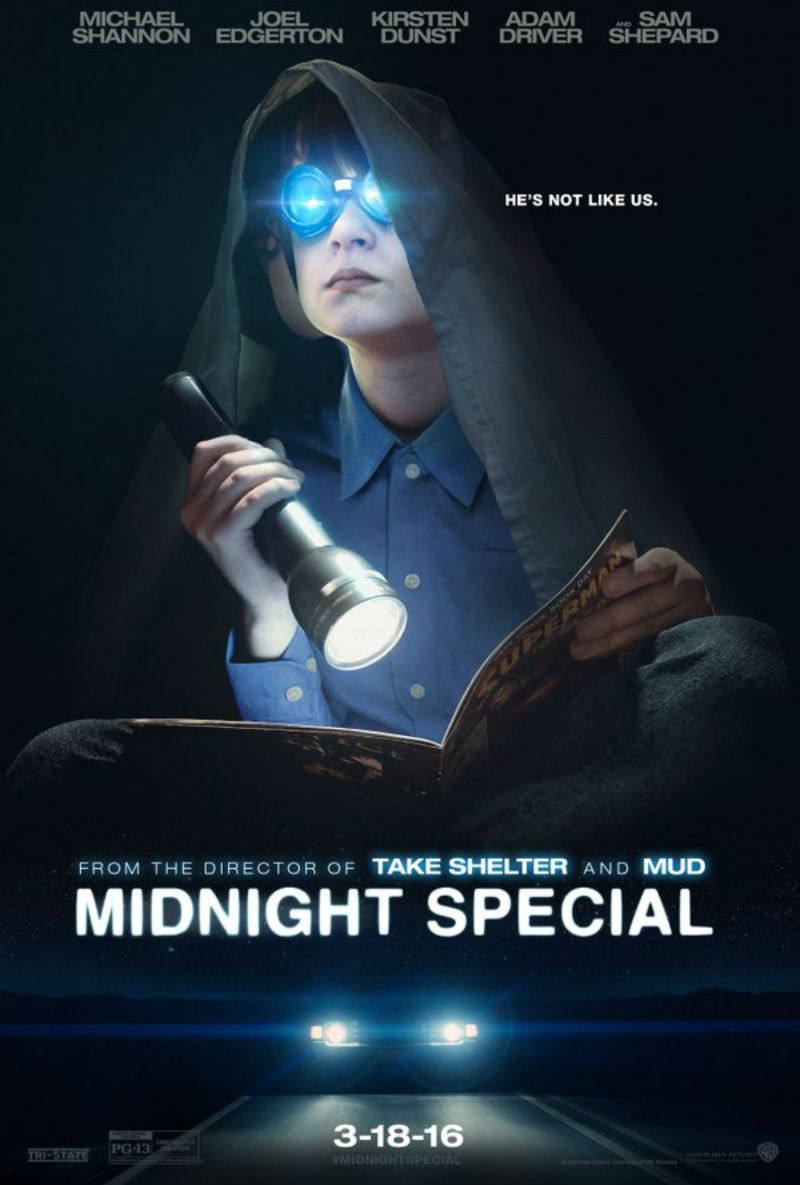
Midnight Special

Midnight Special is a sci-fi film about a father trying to protect his son from the U.S Government, a strange cult and a former electrician. Why do those people want this eight year old kid? Because, like every child character in the history of cinema, he has weird supernatural abilities.

I have a feeling that this is going to be a shorter review than some of my other recent reviews. This is partly because I generally find more to talk about when reviewing a movie I didn’t care for rather than one I did, but also because there’s little I’m willing to say about this pretty good movie since any more would contain spoilers.

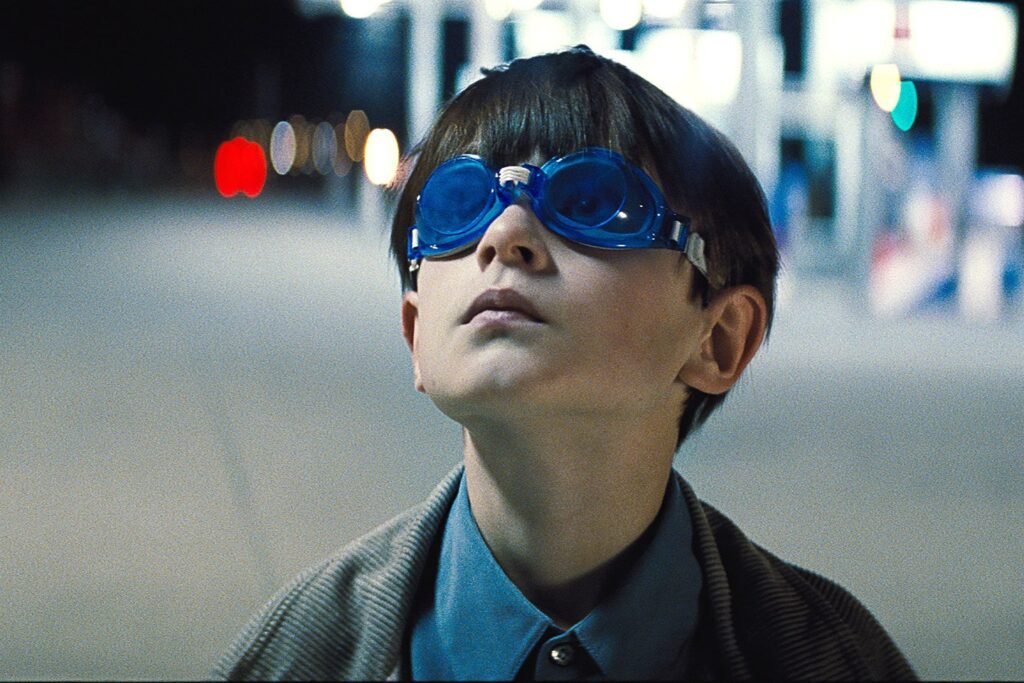
It would be interesting if this kid played Batman.

“Do you bleed?”

This is a film thriving on the mystery. One could easily think of this as an extended episode of The X-Files or The Twilight Zone. I appreciate in a time where we get 2 hours of one act and about 30 minutes of stuff happening (cough, cough Batman v Superman), that this film pretty much starts where you’d expect any other writer to start this film’s second act.

We are already in the process of following this escaped kid and his father escorting him to safety. The involved characters are introduced to us in an organic way that weaves its way pretty nicely through the plot. I know who each of these people are and what they want at a good pace. On top of that, the mystery’s solution is trickled This is pretty darn good screenwriting.

The father in this story is by Michael Shannon and the son by . Both play these roles with deft skill, getting across the love and respect they have for one another in a relatively short amount of time.  also impressed me for his ability to balance the “powered kid” cliché with actually acting like a kid. He feels definitely more like Haley Joel Osmond from The Sixth Sense by his terrific director rather than whatever those kids from Signs were being told to do by their talentless hack.

If I were to mark any flaw in this film is that there are a couple of moments, particularly those close to the end, that I feel could have been cut. This problem extends at certain points to the strangely elongated feel to some of the reactions. Maybe, I’m wrong about that latter point and just need to go to another screening. The former complaint I feel strong in its founding.

Overall, however this is a fine little science fiction yarn with plenty of mystery and wonder in a small place and surrounding a small boy.

Recommended Scenario: If you’re into small-scale science fiction.

Victoria

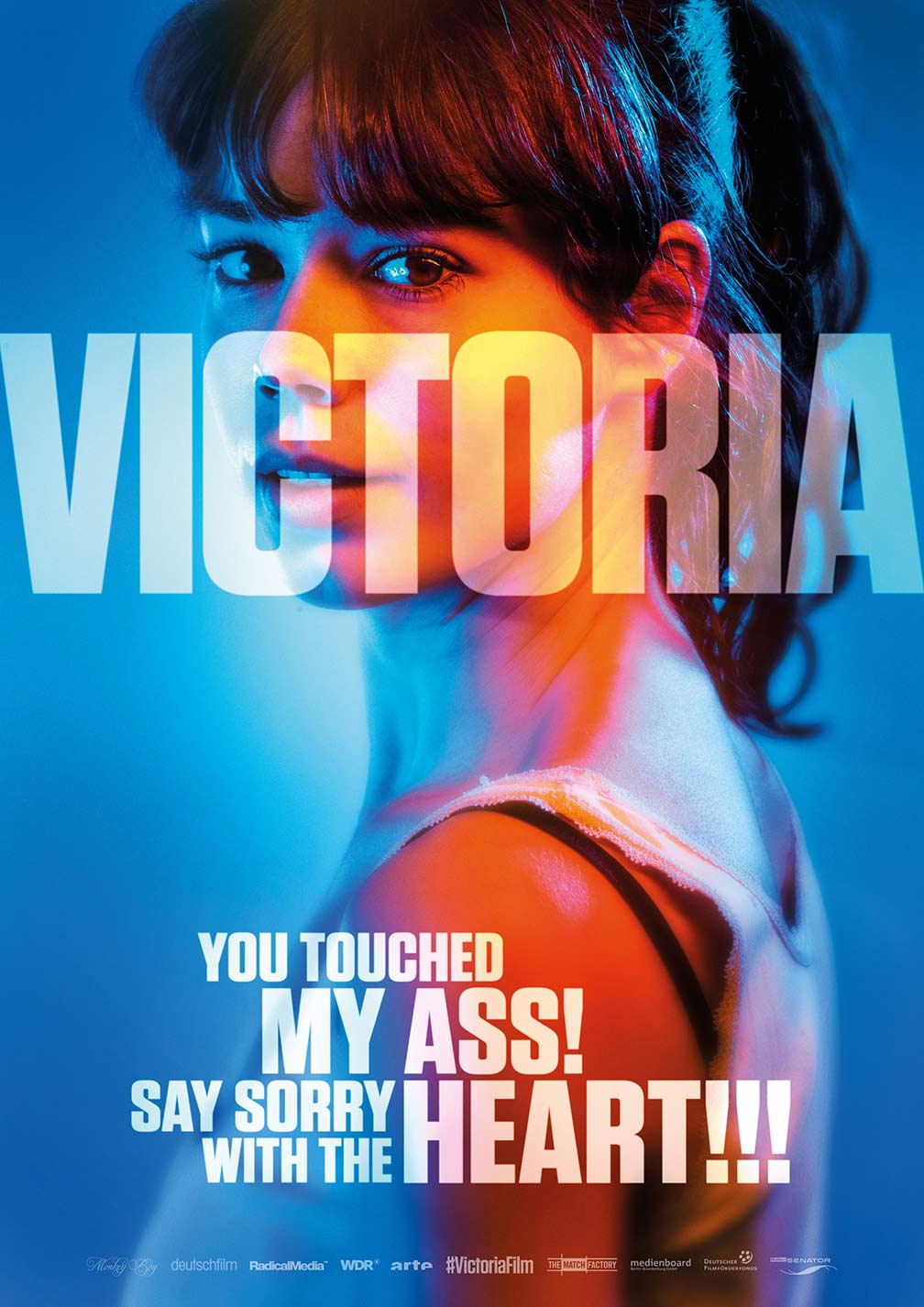
Some of the best magic tricks are when you know what it took to pull off the illusion but you still have no idea how it was done. Victoria, directed by Sebastian Schipper, is one of those.

It tells the story of a young woman from Madrid on a night out in Berlin. Upon leaving the club, she meets a group of Berliner men who “show her the real Berlin”, eventually involving her in a bank robbery. Oh, and this is done in ONE TWO-HOUR LONG TAKE.

One can almost hear the director nearly fainting with anxiety.

There is a sense that there is some one-upmanship in cinematographic circles at the moment. Your film has a three-minute unbroken take of a guy going into a club (Goodfellas), well ours stages an entire conversation for 17 minutes with no movement (Hunger).

With a digital filmmaking revolution, it was only a matter of time before someone would pick up where even Alfred Hitchcock failed in Rope and make a movie that appears to be shot in one take, last year’s Bird man being a perfect example, with the exception of a couple of scene transitions.

The most major example of what this film attempts to pull off is Alexander Sokurov’s masterpiece Russian Ark, which I believe should go on the watch list of all film students.

Both films are full length motion pictures done in one continuous shot. Both took three attempts to get right. Both are technical marvels.

There are notable differences between Victoria and Russian Ark which allow it to be placed in as high regard in cinematic history. While Ark is simply a tour of a museum and through Russian history (which became so beautiful at times that I genuinely wept) this is a more traditional movie. Think Reservoir Dogs, The Town or any other heist movie and you could put it there. Like all great technical tropes, the one-shot style is a means of telling the story rather than just showing off, though no doubt this is definitely a show off as well.

The first half hour of this movie introduces us to the titular Spanish woman on her night out and to the men that she has a fateful encounter with. Laia Costa plays Victoria and she is a revelation. We know everything we need to through her mostly improvised dialogue. On top of that the character she reveals is not one I would have expected to be in this position. I would have expected her to be more passive and victimised by the situation she eventually finds herself in, but Costa and the narrative that the filmmakers have given her shows her to be a far stronger and more interesting character than first appearances suggest.

The entire cast deserves serious kudos. I mentioned that dialogue was improvised through this movie, which is understandable since Schipper couldn’t exactly get them to go for another take every time they messed something up. It is often said that theatre is an actor’s medium while cinema is a director’s medium. A movie like this blurs those lines.

Through the 138 minutes that the camera rolls, we hear every line through sound design and editing so good it boggles my mind, and through each one we learn more about the characters and care about them more. I felt like I was among them, unable to leave them and not wanting to.

The fact that the story remains as tight as a one act play is a marvel in itself, though I will admit to finding some elements of the plot to be implausible. I will not state what those elements were, should I spoil the movie for some, but they certainly didn’t for me.

On the whole, this is an excellent movie. I can’t say that I would put it amongst the very best movies of all time, but I would put it amongst the most important technical achievements. And what’s more of an achievement is that it goes beyond an exercise of technique and becomes a highly effective human drama, amplified by astonishing technical skill.

Recommended Scenario: Whether you’re a technophile or a lover of good drama, you’ll find something in this movie.

NOTE: I must give a health and safety warning about this film. There is some severe strobing at the beginning of this movie which may affect some viewers negatively and unlike Russian Ark which glided through corridors on a smooth steadycam, this camera is quite shaky and that may be an issue for some of you.

Batman v Superman: Dawn of Justice

Is that seriously what they’re calling it? Yeah, I’ve still not stopped saying it. That is a title written by an 11 year old. In a bad way. I mean either they didn’t read it out loud or they are grasping at straws to prove that they’re serious about making Justice League.

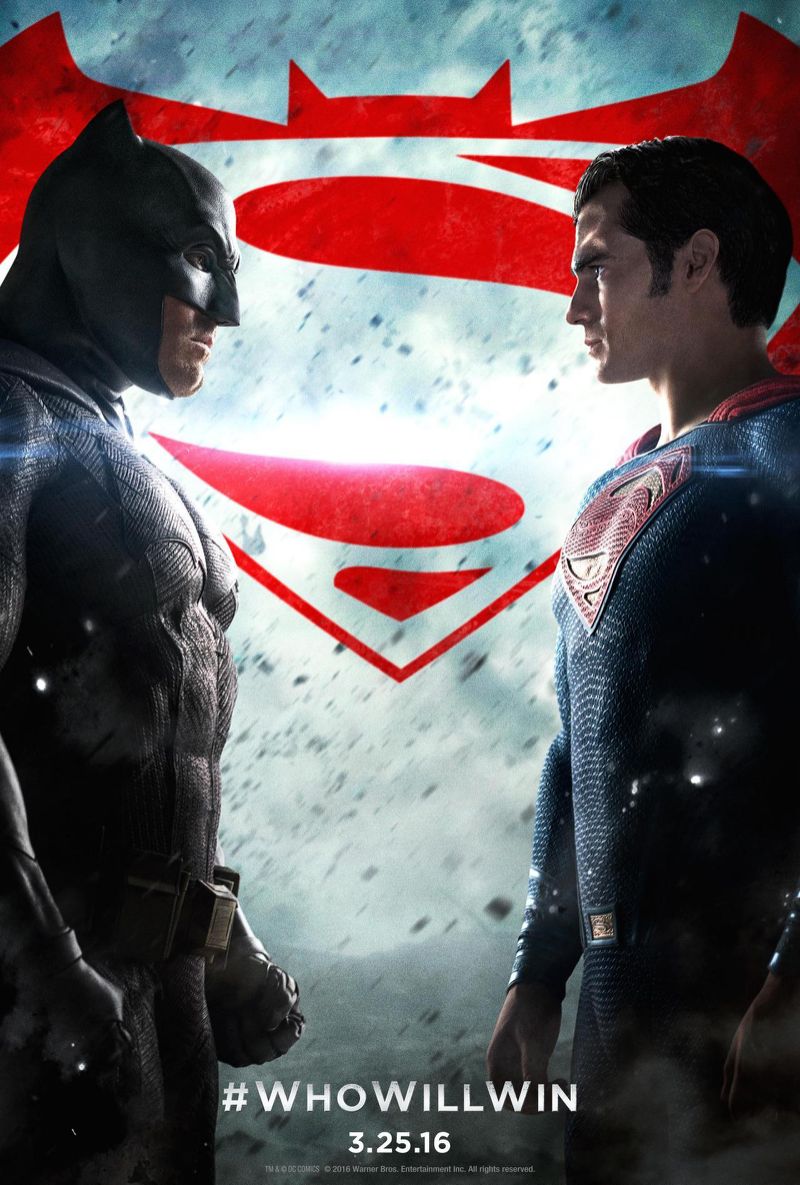
Before I go into full “internet-backlasher” mode, let’s look at what this movie is. Batman v Superman: Dawn of Justice, follows on from 2013’s Man of Steel with the story of how that steel man, met Gotham’s Dark Knight and got into a fight. Something that I have been wanting to see for a long, long time and those properly into comics, a lot longer.

People Touch Henry
With this film being announced back in distant 2014, we have all had a lot of time to speculate and pre-criticise. My family made the excellent point that the very title brings us images of the That Mitchell & Webb Look sketch, Angel Summoner & BMX Bandit, in which two superheroes of those respective names try to co-exist as a crime-fighting duo, yet find a challenge in keeping the latter relevant when the former can “summon a hoard of celestial super-beings”.

Such jokes have been circulating for years, ever since the comic industry, particularly the super-hero sub-genre, first made demands to be taken seriously, with the release of Alan Moore’s masterpiece Watchmen, in the 1980s. The rest of our culture, found it difficult to get past the very clear logical flaw in having Superman, an alien who is basically Hercules with laser-eyes (which would have made taking on the Hydra a little easier, no doubt), either collaborate or fight the insane billionaire genius Batman.

So, the very basic idea, to those unfamiliar with the comics and their glorification of Batman and his American Dream “mortal who becomes more” idea (even though Bruce Wayne is still a man who inherited much of his fortune and thus is less representative of the common man than he is of the current ruling classes), Batman v Superman sounds silly beyond belief.

Well, I can say with confidence that this movie does actually make it make sense. Not only does Batman’s ability to go toe-to-toe with the Man of Steel make sense, the opening few scenes and some of the more philosophical moments later in the runtime, give us a dark and convincing reason why the Dark Knight would find the presence of this Kryptonian Boy Scout in red and blue, offensive to his very core.

What is less well-explained is some of Superman’s hatred for the Bat and why I should wholly sympathise with Supes. This guy often comes across as a vandal who cares only for himself or those he’s already met. We are given a brief montage of him doing good deeds, but not enough for me to think he is anything other than something Batman should probably beat a lesson into.

I suppose that the audience is supposed to sympathise with him because he’s Superman. We’ve had 80 years and 6 major live-action films to get to like this guy. Trouble is, I have never liked him. While I have gotten used to the idea of a hero with near-unlimited power (which I used to think made him more boring, but I feel now gives him simply another way the guy can be complex), we more often than not get someone who irresponsibly causes problems than solves them.
Let me put it this way, while everyone says that “Superman doesn’t kill people”, I have never once heard him explicitly state that as a rule, not even after snapping Zod’s neck at the end of Man of Steel. And the death toll climbs.

What’s good though about this, is that we have an excellent cause to sympathise with Ben Affleck as the new Batman. Despite the whines of the Internet, the man is an excellent protector of Gotham. Given more time in his own movies, I feel that he can prove himself to be possibly, dare I say it, the best actor to don the cape and cowl I’ve ever seen! (Except Kevin Conroy and Adam West, because they were and continue to be perfect!)

Speaking of casting, it’s all pretty solid. Henry Cavill, though his character lacks literally any fun or camp that the great Christopher Reeve bestowed unto him, does make a convincing Demi-God. Maybe he’s a little too good. Affleck when playing Bruce Wayne, works in a little of that dumb playboy act that the character puts on to make him more invisible. Cavill as Clark Kent certainly puts on the glasses (which I’m so glad doesn’t stop Amy Adams’ Lois Lane from recognising him) but he never appears to play the nerd that Metropolis deserves. I suppose with a jaw-line like that, nobody can possibly direct him to be geeky.

I always thought that Jesse Eisenberg would make a good choice for Lex Luthor and I feel I was right. However, and I never thought I would say this, tone it down Jesse. I get that you’re trying to be awkward yet confident, but take a few more notes from yourself in The Social Network and a few less from Jared Leto in the new Suicide Squad trailer! Also, he should not be Lex Junior, just saying.

Zack Snyder is back as the director, having helmed Man of Steel. I think that Snyder definitely has some talent,, just look at 300 or Watchmen. For all those movies’ problems, of which there were more in the former than the latter, at least the style worked for the most part as it captured their source materials in a superb way.

However, these Superman films are dreadfully directed. The camera shakes in places it shouldn’t, the colours are all smudged all over the shop, reaction shots go on for way too long and the tone remains at Saving Private Ryan levels of sad. The action is really good, but you don’t have to zoom in and shake the camera in every dialogue scene. You’re not making a found-footage movie, you’re making Batman v Superman!

Once this expanded universe, which this movie, with hits and misses, sets up, gets into gear, it would be cool to see the vision of some other directors and cinematographers. What if Allejandro G. Inniritu took on a movie version of Teen Titans, or David Lynch did something at Arkham Asylum?! Long shot, but you never know! Heck, before Citizen Kane, Orson Welles wanted to make a The Phantom movie!

This movie currently sits at approximately 29% with critics on Rotten Tomatoes. While these aggregators should never be the basis of one’s assessment of a movie’s quality and are one of the signs of our world’s lack of interest in reading actual criticism and desire to place a number on something, this should act as an indication that it’s reception from the critical class has not been the warmest.

You know what? For all of Jesse Eisenberg’s occasional Mark Hamilising, Superman’s terrible actions, a dozen moments which make no sense and directional and writing decisions that genuinely made me turn around and ask what the hell I was watching, I think this movie’s pretty good.

There is some epicness about the fight between these two giants of pop-culture. Some of the philosophy involved is actually pretty thought-provoking, indicating at ideas that, with a little script polish could have elevated this flick into a proper classic.

If you hated this movie, I get it, I really do. However, if you will indulge me, I can’t deny that there were enough moments that made me smile at how cool it was that I can’t say that I feel entirely the same way.

Plus, this really isn’t the low-point of either of these film franchises. Not to sound like every other internet film commentator ever, but I didn’t see a single bat-nipple or Nuclear Man anywhere in sight!

Recommended Scenario: It doesn’t matter, you’re probably going to see this anyway. It’s Batman v Superman!

High Rise

 This might be the weirdest film I’ve ever seen in a multiplex. That may be a reflection on my choices of films to review rather than anything else. I’m not going to argue that this is some Lynchian labyrinth or some dog from Andalusia, but this is one bizarre picture. (If you got both of those references, give yourself a pat on the back, you’re a true cinephile!)

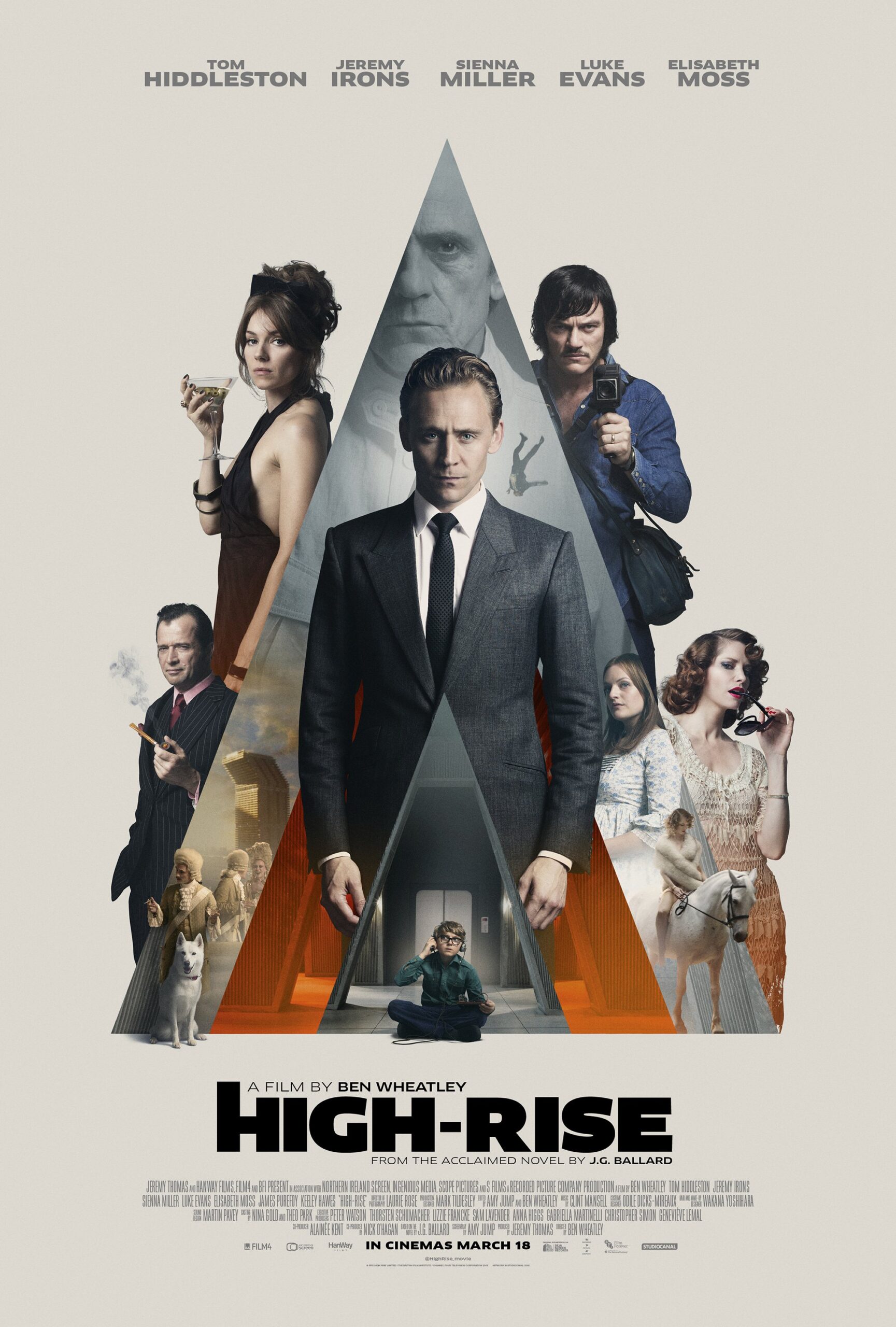
Based on the J.G Ballard novel of the same name, this is a satirical near-fantastical movie about an area of Britain in an unknown period where there are high-rise flats which implement a social hierarchy which leads to life there being “prone to fits of mania, narcissism and power failure.”

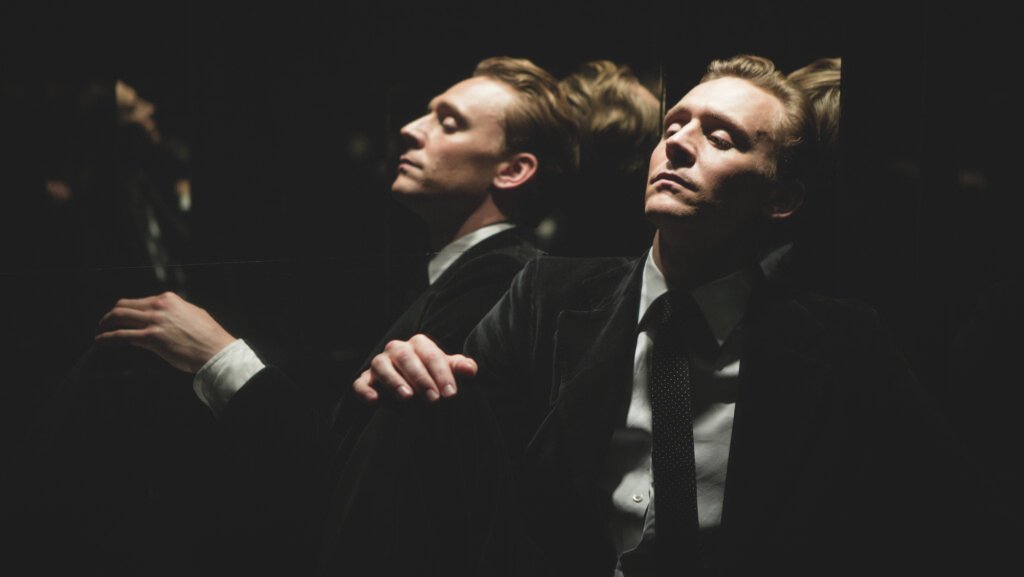
Tom Hiddleston is stuck in a lift with the worst possible person. Tom Hiddleston.

When it comes to “artsy” films, with a lot of metaphor and hidden meanings, I believe that as long as the movie is at least competent, pretty much everyone in the cinema will broadly “get it”.

It’s pretty clear that this film is a satire on humanity’s desire to return to tribal warfare, even in a modern, polite era.
I feel, however, that there are layers to this film that would require whole articles of analysis, which would go into spoiler territory, which is entirely not my domain.

Before I get into the stuff that is a little more difficult to go over in this story, let’s look at the way this film is put together.
Tom Hiddleston is our lead, a doctor who lives in the high rise and wants to live a peaceful existence and yet gets tangled up in the mess of those around him. We have seen characters like this before in other near-fantastical stories about man’s base nature. He is us, looking into the abyss of other people’s depravity.

What’s great about this character, though, is that he is not entirely passive. We actually see him fall into the madness as well. What results is us empathising with those who get sucked in. We get sucked in. The madness is more real than originally thought.

Jeremy Irons plays the architect of the high rises. His involvement in the spreading of the ensuing anarchy becomes more ambiguous, though you cannot deny that the very creation of these towers were the seeds of chaos.

The stand-out performance for me comes from Luke Evans (you know, Bard from The Hobbit). He is the rebel. The representative of the lower floors who tries to fight his way to the top in the hopes of creating a more equal society.

It is not surprising to me that the book on which this film was based was written only a few years after the film adaptation of A Clockwork Orange was released. Evans’ character to me is very reminiscent of Alex from that book and film, doing some unspeakable things in the name of human freedom, but ultimately gaining our sympathy. Is his revolution in vain? Even after seeing the movie, you might not be so sure.

Another thing that struck me was the direction and editing of this film. A lot of POV shots, epic silences, slow motion, this feels like a big film. Certainly larger than the tall building in which it takes place. There is an understanding that the themes at play here go beyond the surroundings.

There is also an understanding that the audience doesn’t need much convincing that bad stuff is about to go down, evidenced by the editing. Much of the descent into madness after the turning point is portrayed through montage as the behemoth block of flats crashes in under the weight of the petty human beings residing therein. We don’t need to be spoon-fed this change.

Like I’ve said before, I would like to go deeper into this film, though I fear spoilers would be a result and of course, I have seen this movie only once.

As is evidence from this, I like this movie a great deal. It respects its audience and whether or not it is a faithful adaptation of the J.G Ballard novel that I’ve not yet read, I’m at least glad that we ended up with a film nuanced enough to follow in the footsteps of great British 70s speculative fiction.

Recommended Scenario: If you want to be depressed at the nature of the human animal while being thoroughly confused by it.

Hail, Caesar!

Ah the Coens. Two of my filmmaking icons. Let’s see if I can get beyond my rampant fanboy-ism of these brothers and deliver my first, totally unbiased review of a film they’ve directed.

Hail, Caesar! is their eagerly awaited latest project centred around the fictional Golden Age Hollywood studio Capitol Pictures in the 1950s and a “fixer” played by Josh Brolin, a fixer being basically the guy that solves problems facing the many movies being shot on the lot, whether they involve kidnappings, extra-marital pregnancies or even tap-dancing Channing Tatums!

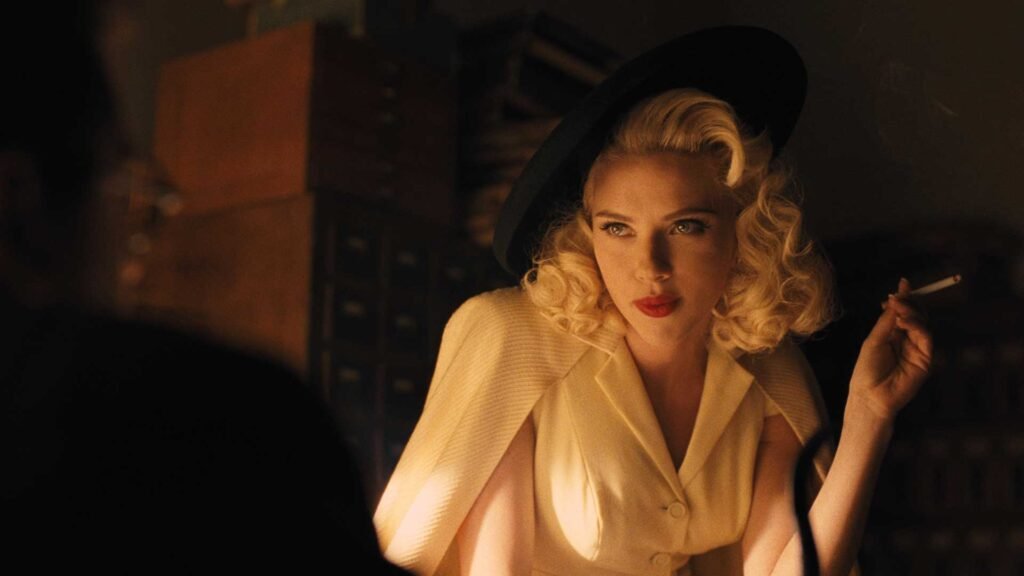
Johannson, perfectly cast as the beauty of the studio.

I am a huge Coen brothers fan. Their writing, their subtle yet affecting direction which generally goes partnered with the wonderful cinematography of Roger Deakins, their characters and their bizarre stories feel like something just altogether wholesome as a film experience.

That style is here in full swing, though like with most of their best work, there is definitely a twist. Since this is a movie partially about the making of movies, we get a tantalising glimpse at what films of that era would look like if they were still to be made in the same style today.

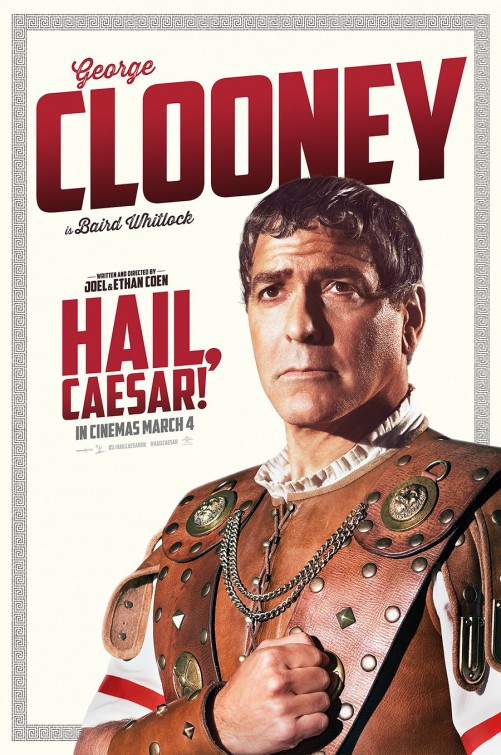
The title refers to swords and sandals epic which is basically Ben-Hur with a couple of details changed and it is really cool to see George Clooney as this buffoonish parody of Charlton Heston. Clooney, in my opinion, makes a phenomenal idiot.

Josh Brolin as the fixer is definitely the centre of this film, within its cast of big names. His presence to me is proof that for all the nihilism you could accuse them from some of their previous works, the Coens have a love of the ordinary individual and a respect for the Spielbergianly whimsical.

The rest of the cast are excellent in their little Coeny roles. I define “Coeny” as an adjective describing a role small enough in overall effect of the story to be counted as small, but having an effortless charm that stays with you for far beyond their screen-time.

What’s interesting with this story is that it definitely has all the fingerprints of a Coen brothers piece while the well-rounded and relatively uncomplicated edges of Golden Age Hollywood have rubbed off on them.

While we do have oddball characters appearing and disappearing in bizarre ways and a mixture between the quite dark and the wholly light and good like most of their best stuff, when the film ends, you feel like it’s an ending to a movie rather than just a perfectly, though strangely placed full-stop. This is not selling out by going more mainstream, in my opinion, this is simply adapting to the setting they’ve provided themselves.

If I had one complaint, it would be a technical nit-pick. The Coens and Deakins are clearly replicating the direction, editing style and cinematography of films from the 1950s, particularly in sequences where we see those films being made, and it is nice to see Deakins returning to film stock. However, for those aforementioned sequences, it would have been pretty cool to see the film look like a little more like it was shot back then, perhaps with a little more grain or something.

But that’s the film nerd in me talking. All I can say is that this is the purest fun that I’ve had in a cinema so far this year. I love this little tribute to the pros and cons of old Hollywood. It’s funny, colourful, brilliantly written and, if you don’t mind me sounding like an old man, bounding with an energy you don’t see in films much these days.

Recommended Scenario: When you’re ready for a good time with a film by a couple of masters.

Spotlight

9 nominees and the one movie that I had not seen wins Best Picture?! Oh Academy Awards, how you find new ways to annoy me I have no idea!

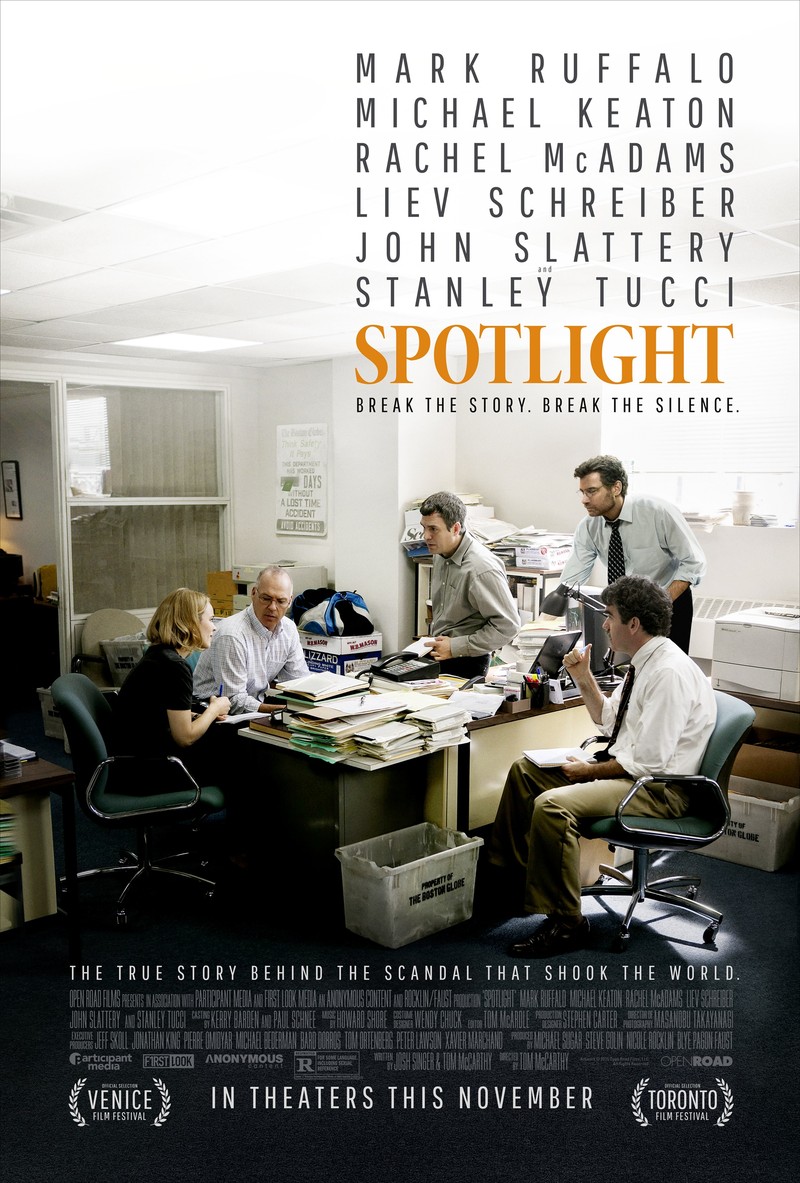
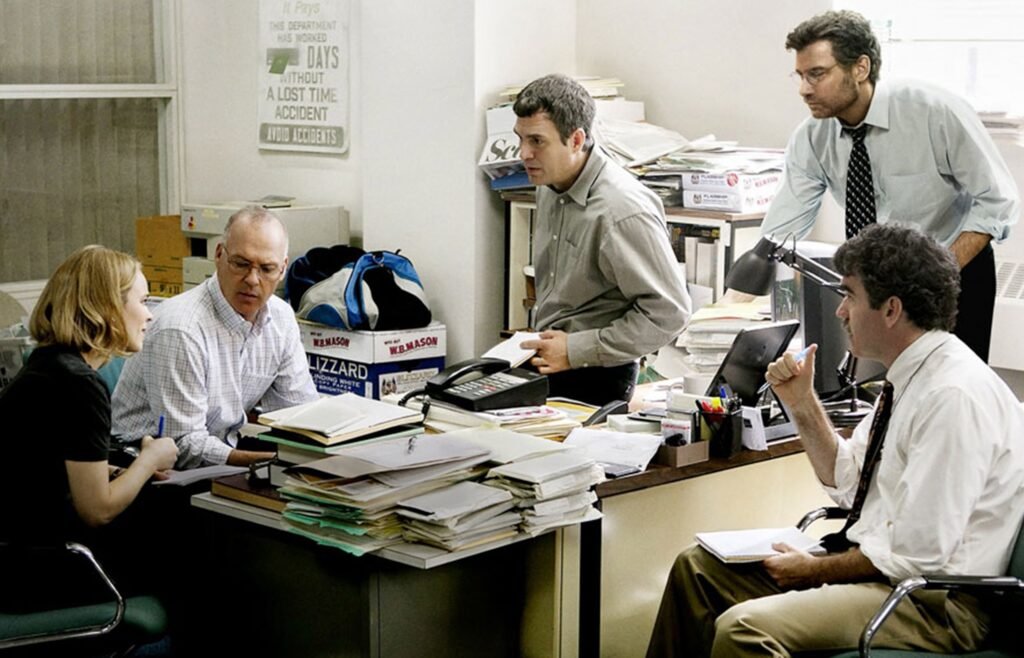
Spotlight follows the investigative branch of the Boston Globe newspaper in 2001 as they investigated the scandal of paedophilia in the Catholic Church and the institutional cover-up which kept it out of the eyes of readers for so many years.

Spotlight (2015)

The ultimate goal of criticism in the modern era is “objectivism”. It’s a goal which is demonstrably unobtainable like inner peace or a perfect film, though both can be experienced, in my purely subjective opinion, by watching “The Lord of the Rings” trilogy.

Baring this in mind, there should be no doubt that one cannot go into a movie with a “blank slate” i.e a lack of opinion before stepping into a movie as soon as you see its title.

The title of Spotlight is not what gave me preconceptions, more the fact that it won Best Picture at the White old male actor’s choice awards a.k.a the Oscars. I knew for a near certainty, based on this and the marketing that this would be a good movie. A movie which spoke about some controversial but important topics.

And what do you know? I was right. A good movie. Perfectly good. Well acted, pretty decently directed and written and a good focus on what mattered in its story.

Well that was a short review, Craig. So for the third year running your favourite movie of the year coincidentally happens to be the favourite of one of your least favourite institutions?

No. This is not my favourite movie of the year. It’s not even in the top five that were nominated. Im also still of the opinion that the only film that truly deserved to win was Inside Out.

Let me be clear, my reasons for this downgrade in my zeal over this movie are not because of the Oscars. I genuinely think that this is a very good movie and it says something important, but I find it difficult to praise it beyond “good”.

I also don’t think it’s because I’m not a fan of dramas consisting of a lot of exposition about serious stuff being talked about in a room, because I clearly am. My favourite Spielberg movie is Lincoln and I don’t know about you, but I really liked Inherent Vice.

There was simply nothing that properly grabbed me in this film. For some reason, the way this story is told and its adequate direction is presented makes me really think its home is not in the cinema, but on a TV screen. Don’t think that that’s an insult. I feel the same way about Argo and Gone Girl and I like both those films very much. This would actually be a pretty good TV miniseries. It’s a reasonably good investigation story and that makes up 97% of good TV.

This would also solve some of the other problems I have with this movie. The characters don’t feel particularly well developed in the 2 hour long runtime. I understand that they aren’t the focus of the story, for obvious reasons, but I feel that they are a little too much like blank pieces of paper.

We’d also be able to see a more full exploration into the pain of the scandal. There are effective scenes in which victims tell their stories, but I feel they would be more affecting if we had more time with them.

The pacing is also a little off. The ending feels like it was searching for a dramatic climax and just didn’t find one because it didn’t happen. I know this is a problem with adapting any true story, but I think that is particularly prominent here.

You should probably watch this movie. It’s a good investigation drama with pretty decent filmmaking. However, I don’t think it’s close to what can be described as this year’s best.

If there’s anything that the Academy Awards highlighted this year, it’s not the quality of the film that matters to them, it’s the subject that matters. This film deals with an enormously important subject, which was poignantly put across when survivors came on-stage with Lady Gaga that night. I’m glad this movie provided attention to this issue, even if the film was merely good.

Right, now, how do I wipe this smug smile off of my face?

Recommended Scenario: When you want to learn about an important story of widespread corruption in the Catholic Church in a reasonably good drama.

Kung Fu Panda 3

This is a very late review. Apologies, I have been extremely busy.

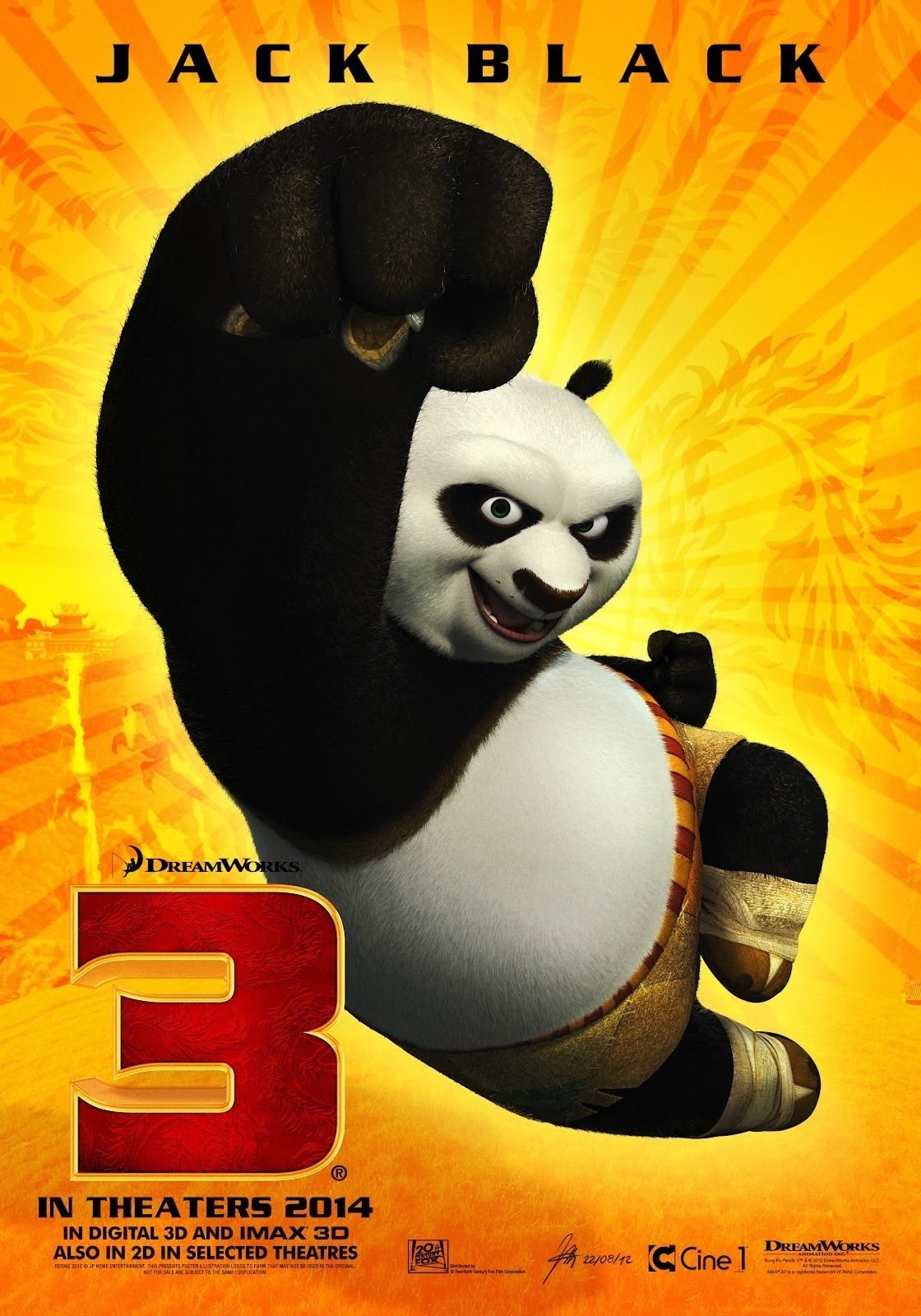
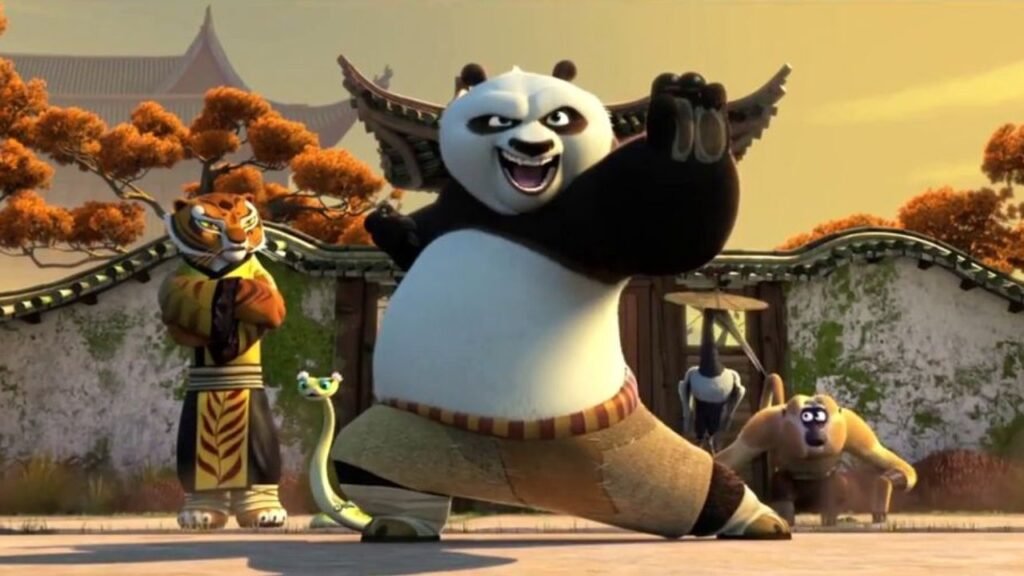
Better ease myself back into it by reviewing something from a beloved franchise. Kung Fu Panda 3 is surprisingly the third Kung Fu Panda movie. Po, the panda, must now learn how teach others the ways of Kung Fu. What follows is reuniting of old friends and the emergence of a deadly old enemy while simultaneously giving a beginners guide to Taoist philosophy.

Five people your 7 year old can name in their sleep.

Yes, I said beloved franchise. I really like the Kung Fu Panda movies. Their stories are involving, their characters endearing and Dreamworks has some of the best moving animation in the business.

My favourite element is the surprising amount of growth in character, particularly in the titular mammal. A lesser sequel than Kung Fu Panda 2 would have Po go back to square one in his training somehow. What they did was build on what he had done in the previous movie.

My main question was, entering into the theatre, would we get a fitting third part to this story?

Well, it ain’t perfect. These movies have all had a slight issue with the plot progressing a little too quickly. Sometimes, I’ve felt that we would benefit from having a few more moments of serene calm to just admire the world and see the characters interact. That’s an issue bigger than the film, in my opinion, most films of this kind have little time to breathe.

Another issue I noticed was that I could actually script out the dramatic moments of the film before they even happened. There were some scenes, which, though moving, telegraphed it’s emotional beats way too early.

Some of the problems of this movie come from its superior predecessors. While the journey of Po comes to a satisfying close in this movie, I believe some set-up of major details which didn’t come in until the sequels in his character in the first film would have provided something more wholesome. Also, the first villain’s actions feel entirely inconsequential other than what he served in the first film’s story.

But that’s the snobby critic in me talking. Let me just pull the rug from under your feet and tell you that this a seriously kick-ass movie.

First of all, our cast is absolutely on point. Jack Black was born to play the juxtaposed martial arts master and lovable dumb-ass, Po. He has managed to attach the growth of this panda to an understanding of what it means to be a doughy fan-boy who likes nothing more than dumplings and sleeping late. This balance is the entire theme of this trilogy.

The supporters are wonderful again. How the heck can a movie franchise called Kung Fu Panda have Dustin Hoffmann, Angelina Jolie and Jackie Chan as three of its mainstays. (Actually the last one kind of makes all the sense in the world.)

This supposed conclusion to the series has J.K Simmons as the best villain so far in the series and Bryan Cranston as a surprising addition to the story, for reasons that I can’t get into. Sufficed to say, I do like his character, though I don’t particularly like the whole “liar-revealed” cliché that this film goes for.

I love Dreamworks when they do action and comedy. In this respect they outdo Pixar by a country mile. The final battle is the best climactic battle I’ve seen from a western movie in too long.

Overall, yeah this is a perfectly good conclusion to this surprising trilogy of family movies. Now if you’ll excuse me, I’m going to get myself some Dim Sum.

Recommended Scenario: With short running times and pretty similar plotlines all culminating in a relatively satisfying whole, this was meant to marathoned as if it were Back to the Future.

The Danish Girl

Eddie Redmayne is back, once again playing someone who must contort themselves and speak in an unusual manner while having problems with their family. Hopefully we don’t get a repeat of what happened in Jupiter Ascending.

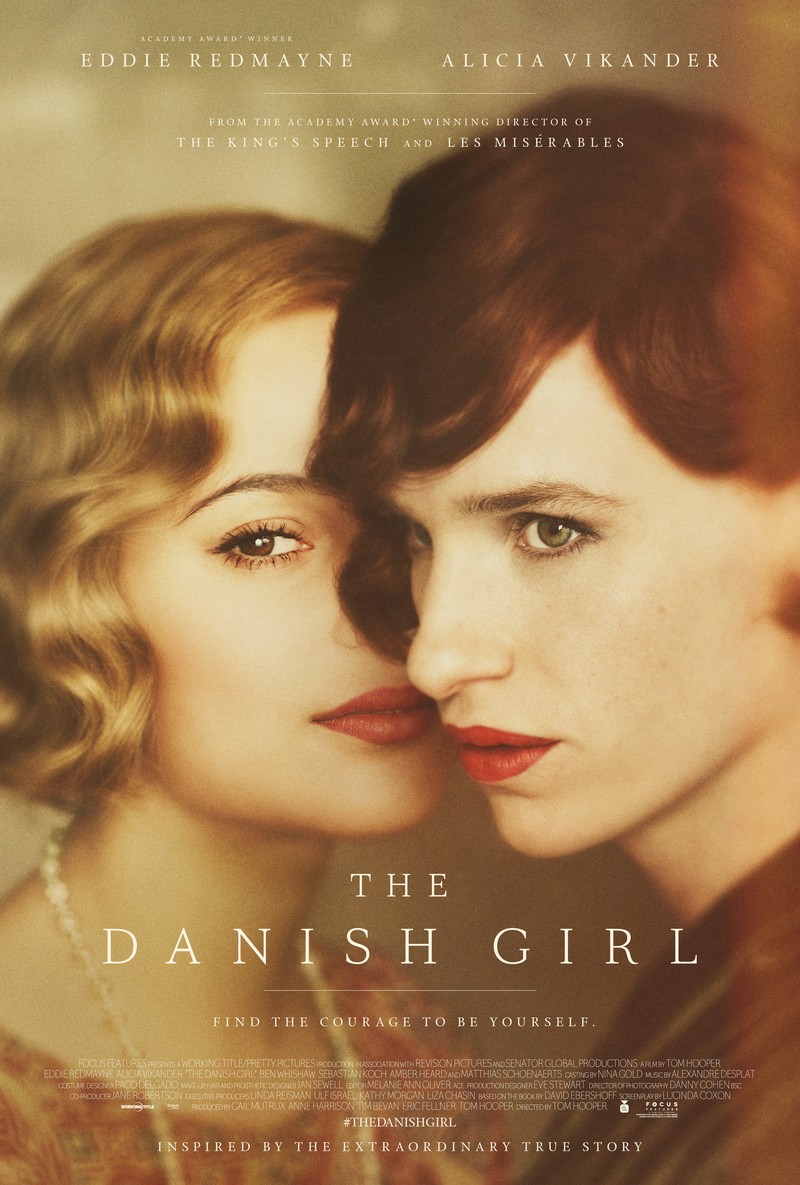
This time, he plays Lili Elbe, the first person to have a male to female sex change, back in the 1920s. Through the runtime of this movie, Einar Wegener, famed Danish painter, transforms into Lili, while the change puts a strain on her marriage to another Danish painter, Gerda Wegener (played by Alicia Vikander).

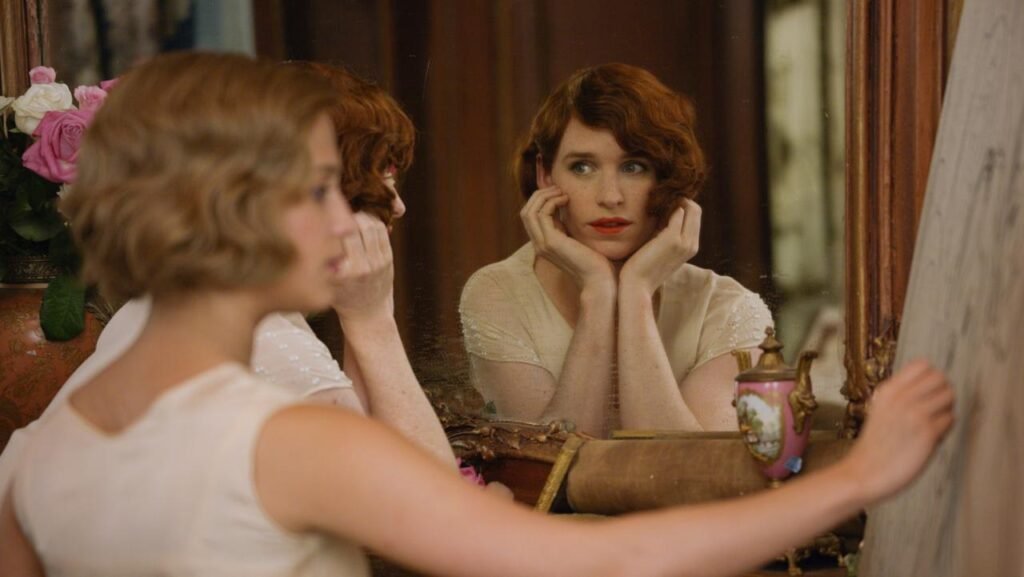
Redmayne and Vikander

I was interested in seeing this movie since it was announced last year for three reasons. One, I enjoy (most of) the work of Redmayne and I now know that I wholly enjoy the work of Alicia Vekandar. Two, it’s directed by Tom Hooper, the director who may be Oscar baiting, but is actually a pretty darn good talent when he puts his mind to it. And thirdly, I was interested to see what a mainstream movie in 2016 would do with the subject of transsexuality.

Before we go onto what this movie does with its subject matter, let’s review the movie itself.

Redmayne and Vikander are both up for Oscars this year for their performances here. I agree, their performances are actually very good. Not too showy, but still getting all the right marks of despair in this confusing situation. Their relationship is the core of this movie and I am very pleased by how well they connect and how tragically things fall apart.

I don’t think either should win, however. My choice for Best Actor is Leo DiCaprio and Vikander’s role here is by no means “Supporting”, that is if I cared about the Oscars. I also believe that Vikander’s stand out performance of the past 12 months was her work on the marvellous Ex Machina.

The story is also very good. The formation of Lili into a full woman is very well-paced and does contain some moving moments. Watching someone discover who they really want to be, after years of it being hidden is something that I can’t help but be moved by.

For some reason though, I found myself not fully moved by this sad story. Perhaps it’s because it was obvious from the get-go where this story would lead. Anyone with a basic idea of what the premise is will be able to predict where this film will go.

There’s also an irritating sub-plot, if you can call it that, wherein Vikander’s character tries to reach out, romantically to another man. I don’t know if this actually happened and I get why they would include it, to show what this experience is doing to her, but I found it way too clichéd and distracting from the point of the piece.

Tom Hooper is a director that I notice has been getting flack from some corners of the internet film critic community, not necessarily because they don’t like his movies, but more because he appears to be exploiting a formula for giving himself Oscar gold.

While The King’s Speech, Les Miserables (2012) and even The Danish Girl all tick various boxes for the retrieval of the golden naked man (actors having transformative “actor-friendly” parts, bizarre hit & miss cinematography, historical subjects, British accents, royalty, technical and subjective gimmicks that grab headlines just for being there etc) I still love the former two films very much and I think that’s down to in no small part the work of the helmsman.

The Danish Girl is probably his best looking film thus far. I hope that he has learnt the lessons of his previous work, that just because one can break the rules of basic composition to convey something unique, sometimes those rules are meant to be followed. (Just re-watch Les Mis and ask why the camera is that close to Russel Crowe’s face.) What’s also good is that he still knows how to gain good performances.

Now let’s get onto the tricky subject, the subject.

With so much going on in the world regarding the LGBTQ community, it was only a matter of time before we started to get more mainstream depictions of those in that community. Queer cinema, cinema that predominately features gay, bisexual or transsexual themes, has been around for ages and has been getting the attention of critics for ages.

Maybe that’s why when I looked at initial reviews of The Danish Girl, some were a little negative when discussing this subject matter. They’d seen all this before and this movie feels like an introductory course on what being transgender means.

But to me, as someone outside of that community, having never gone to Cannes or Sundance or really seen any of these smaller movies, Boys Don’t Cry, Tangerine etc, my experience is probably a lot closer to that of the general cinema going public, or at least the ones who go to the awards season movies.

These people, for the most part, will obviously not need a beginner’s guide to what transgender people go through. However, with this film, a classy “Based on a True Story” drama, we have a means of breaking down an invisible, non-enforced barrier when discussing this subject. Like with something like Django*, taking a subject matter (in that case slavery) and putting it in a familiar genre (in that case the western) gave a bit of a refresh in the way we look at this issue.

Mainstream media is certainly talking a lot about the transgender community at the moment and the depictions in movies and TV that are coming out at the moment are thankfully positive.

I don’t think we’ll be talking about The Danish Girl as if it’s something earth-shatteringly controversial, but it serves as an example of 21st century mass media opening up this whole issue to a new generation. I think that’s a humble achievement that doesn’t necessarily deserve a standing ovation, but deserves recognition from a polite nod.

Recommended Scenario: If you want a pretty decent costume drama that does something pretty unique with a pretty Eddie Redmayne.

*I’m sorry I keep going on about Tarantino films. I’m getting into a habit.

Goosebumps

I’ve got to be honest, I was going to watch Spotlight, but I was too hungry and sad to watch a film tangentially related to that film’s subject matter, so I decided to eat a pizza and then watch a later showing of Goosebumps.

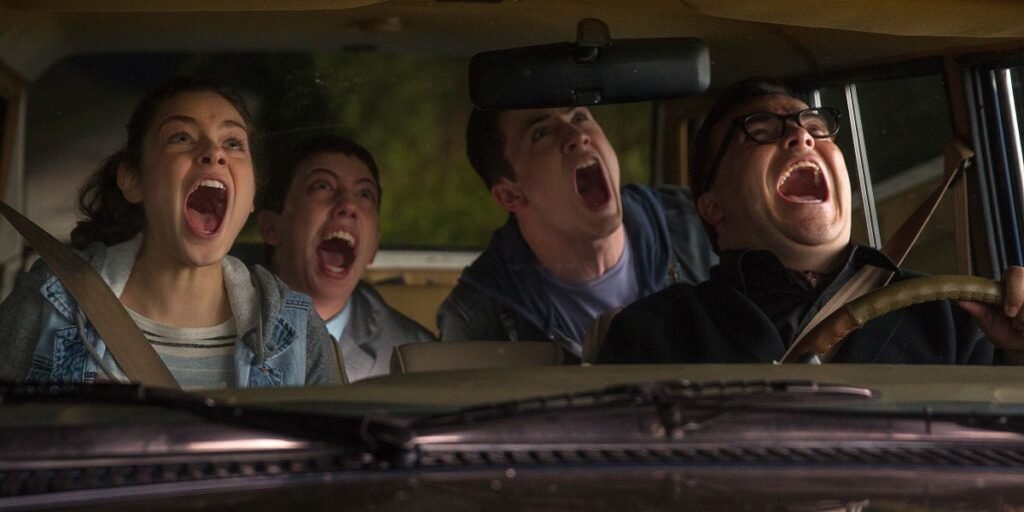
Goosebumps is sort of based on the popular series of children’s books by R.L Stine. By “sort of”, I mean the film is based in a reality in which the series of books is still a series of books, but R.L Stine is Jack Black and his creations within the books come to life and cause bedlam.

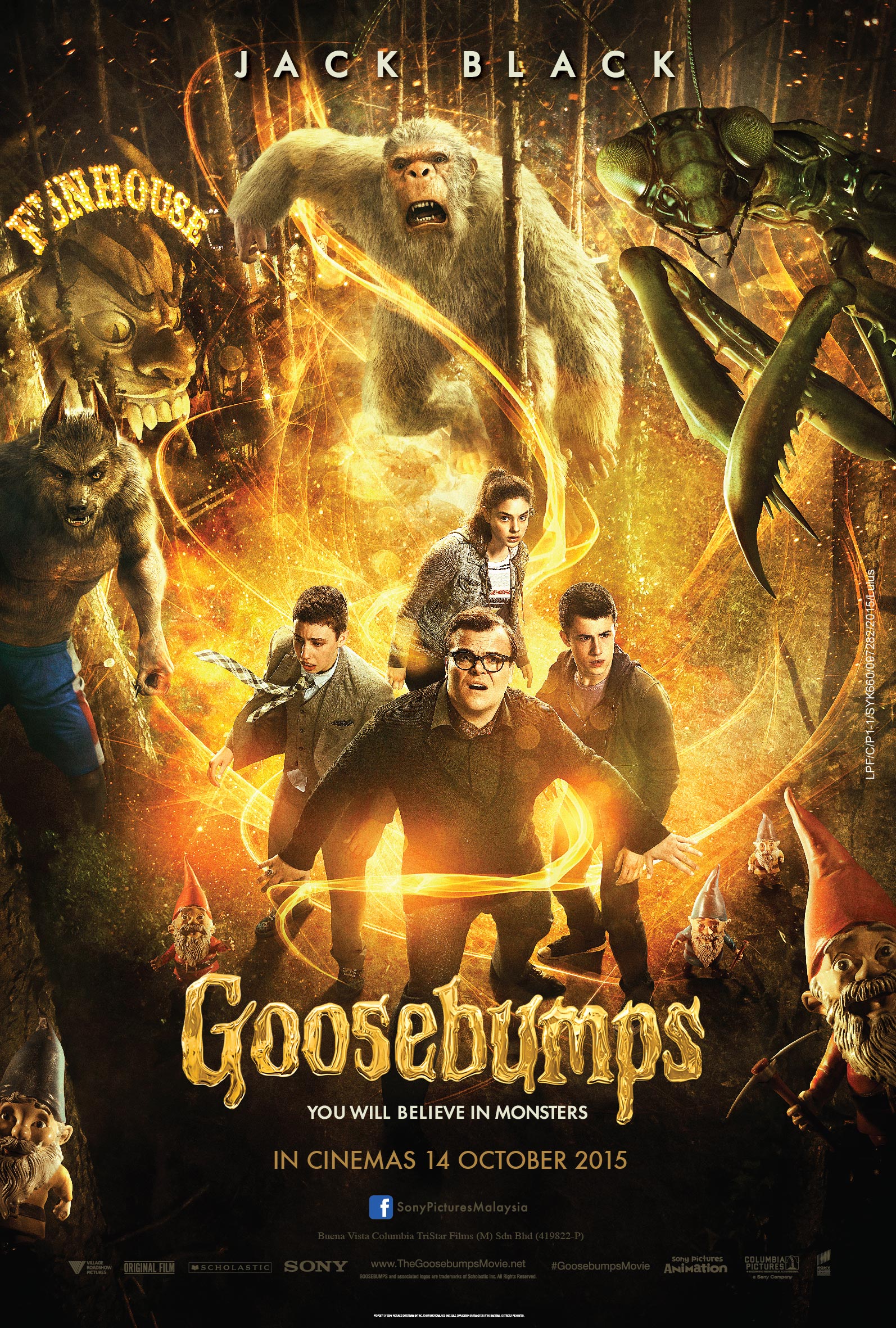
ARGH! King Kong! (Seriously, remember when Jack Black was pretty much the leading man in Peter Jackson’s King Kong)

I bet that sounds exciting! Well, one slight hitch. Our protagonist is not Stine, it is some boring high school boy called Zack or Zac or Zach (I’m not looking it up).

Why? Why do they keep doing this? Why can’t we have a movie aimed for kids that doesn’t have an underwhelming young actor in his “breakout role” where he is simply meant to be relatable. Yeah I get that it’s important for protagonists to be relatable, but sometimes you just have to let the kids look at a situation where Goosebumps characters come to life and ask no questions, but fork over cash.

It’s even stranger when that’s actually kind of what we’re expected to accept. There’s no back story which explains how these beings came to life. We are literally just told that R.L Stine’s typewriter is magic and we should deal with it. That’s economic, no nonsense writing right there. So why have the kid with what’s apparently the most marketable name in the history of media?

To be fair to the guy, he’s not awful. I’ve certainly seen movies with worse leads and lead performances. And the fact that they have someone in their later teens, means he doesn’t have any bad kid-actor syndrome. Sure, he’s bland as chalk, but at least he’s not offensively bland.

What I was worried about was how they were going to deal with the teen stuff our lead does. Luckily there are no skateboards, school bullies or any other irrelevant teeny things to distract from the plot. There is a spectacularly badly written love story between Stine’s daughter and Zachory, but if you cover your eyes and ears for a few minutes, you won’t want to end it all.

We are also joined by Nerd. The guy has a name, but I’m just going to call him what I remember him to be. A Nerd who does nerdy, dweeby things and is a big fan of the Goosebumps books, so we have someone who can suck up to how great this movie’s source material is (we’ll come back to that issue later). Like I said, they don’t do the bully angle and since he’s in late high school, there’s not really any ostracizing of the guy other than the fact that he just isn’t cool. I’ll give the writer credit, that is actually a realistic portrayal of what it’s like to be a nerd in late high school.

Before I go further in trashing this thing (if you can call it that, I believe I’m actually being relatively fair), let’s talk about the things I thought were OK.

First of all, Jack Black. I think he was good here. Not great, but certainly not bad. He has a strange OTT delivery of a mad scientist and a demeanour that is comically threatening at times. While the writing may not be that good, the guy is definitely trying to make this performance of a real guy not entirely kiss the guy’s feet.

Secondly the monsters. Not really because of the carnage they do or their designs, which are purposely basic and recognisable from previous stories of similar ilk, but because of the way they enter and exit reality. I just thought their CGI transformation involving ink from the pages of books was pretty cool.

That’s pretty much all I liked about this movie. The rest is pretty forgettable, sometimes confusing and sometimes annoying, but to go into detail about the stuff that ticks most of those boxes would go into spoiler territory.

What really bugs me about this whole endeavour is that, while I was never a fan of Goosebumps as a kid, I know that many people my age were and they would be interested in an adaptation of the BOOKS that they loved. Like I said, this movie had a good idea in having the books exist with the monsters coming to life from them, but I think what we need is a T.V Show.

In fact, we don’t need a T.V Show. What we need is nothing. We have a bunch of bestselling children’s novels already. Why don’t I just read those?

Recommended Scenario: Like I said, read the books, or watch Doctor Who like I did when everyone else was reading them.